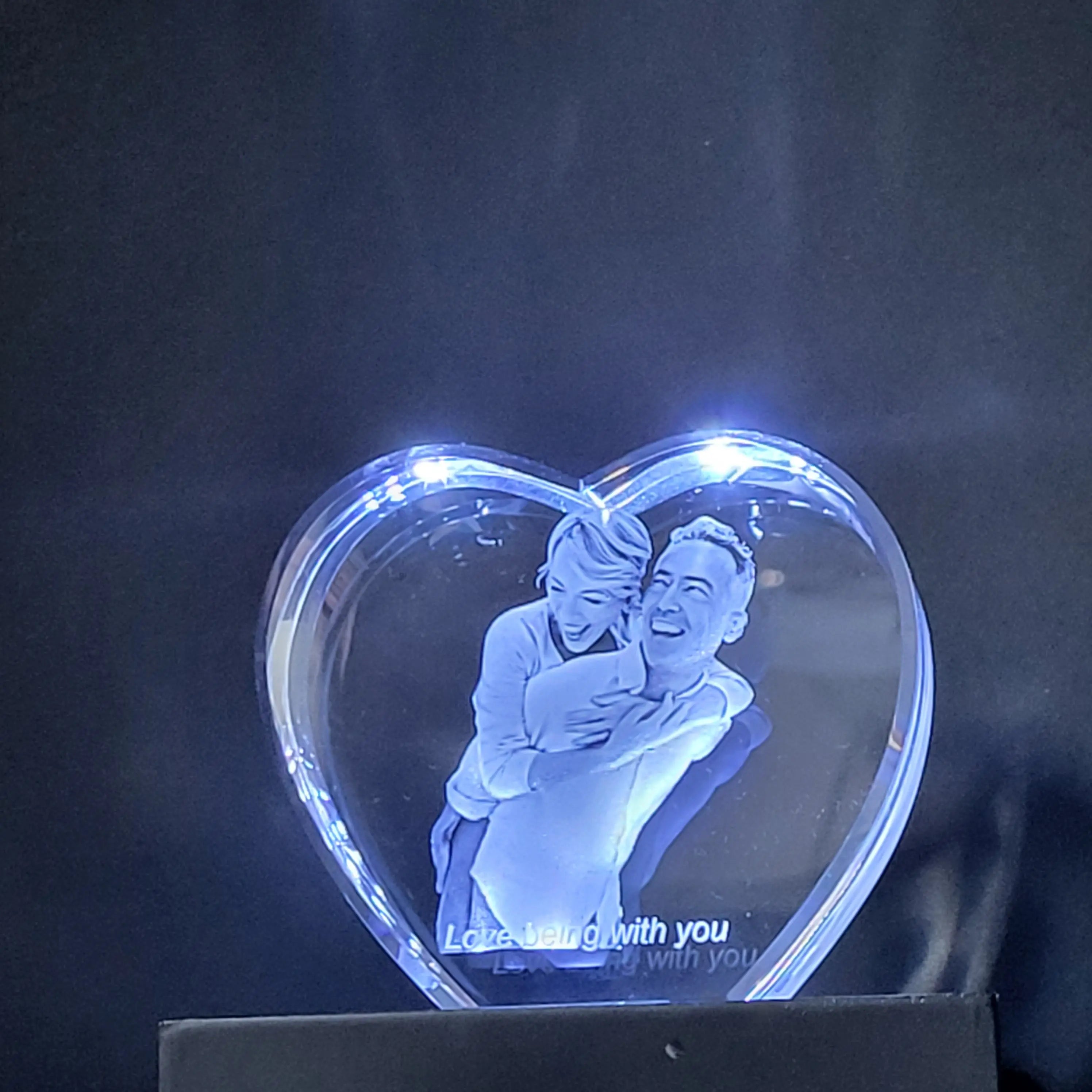
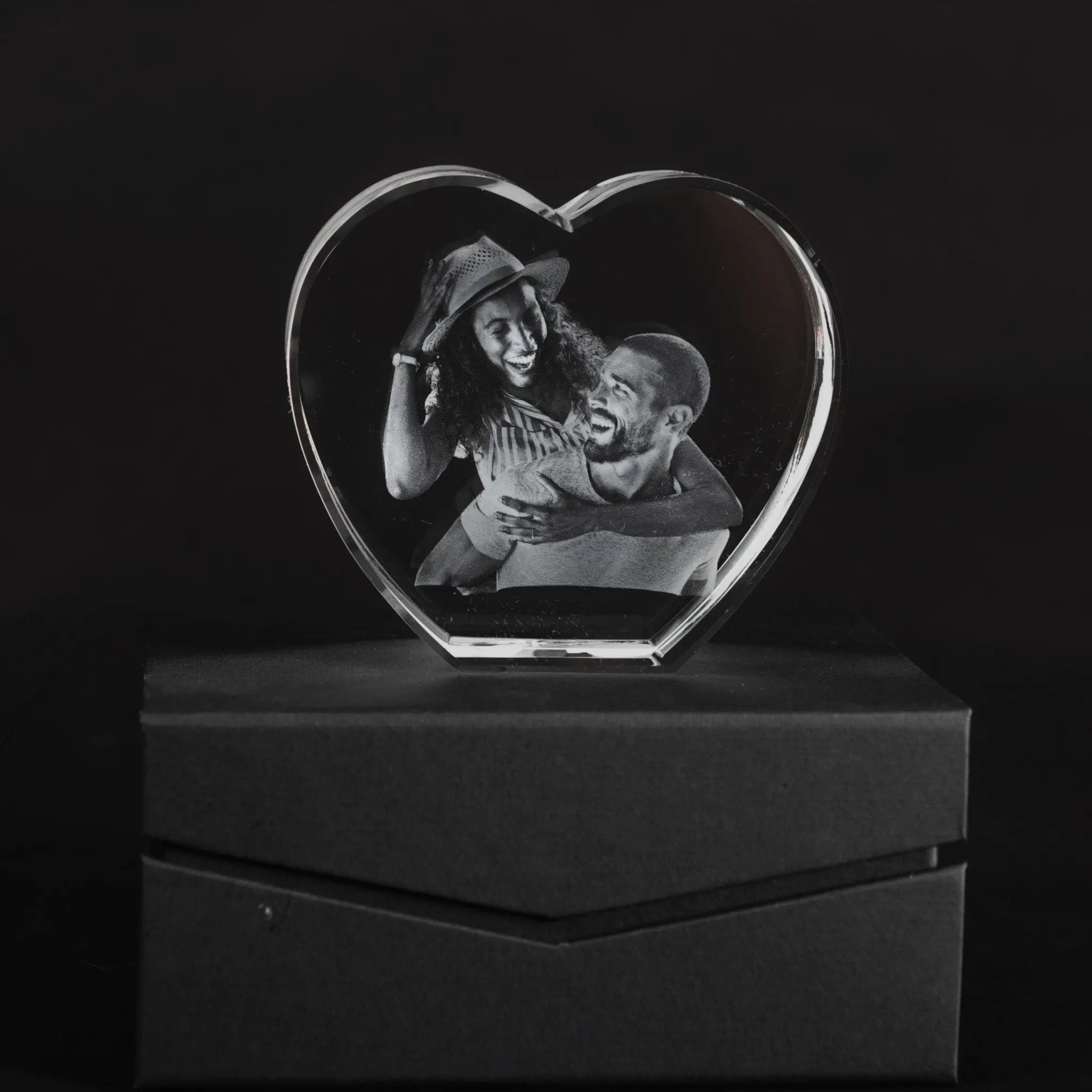
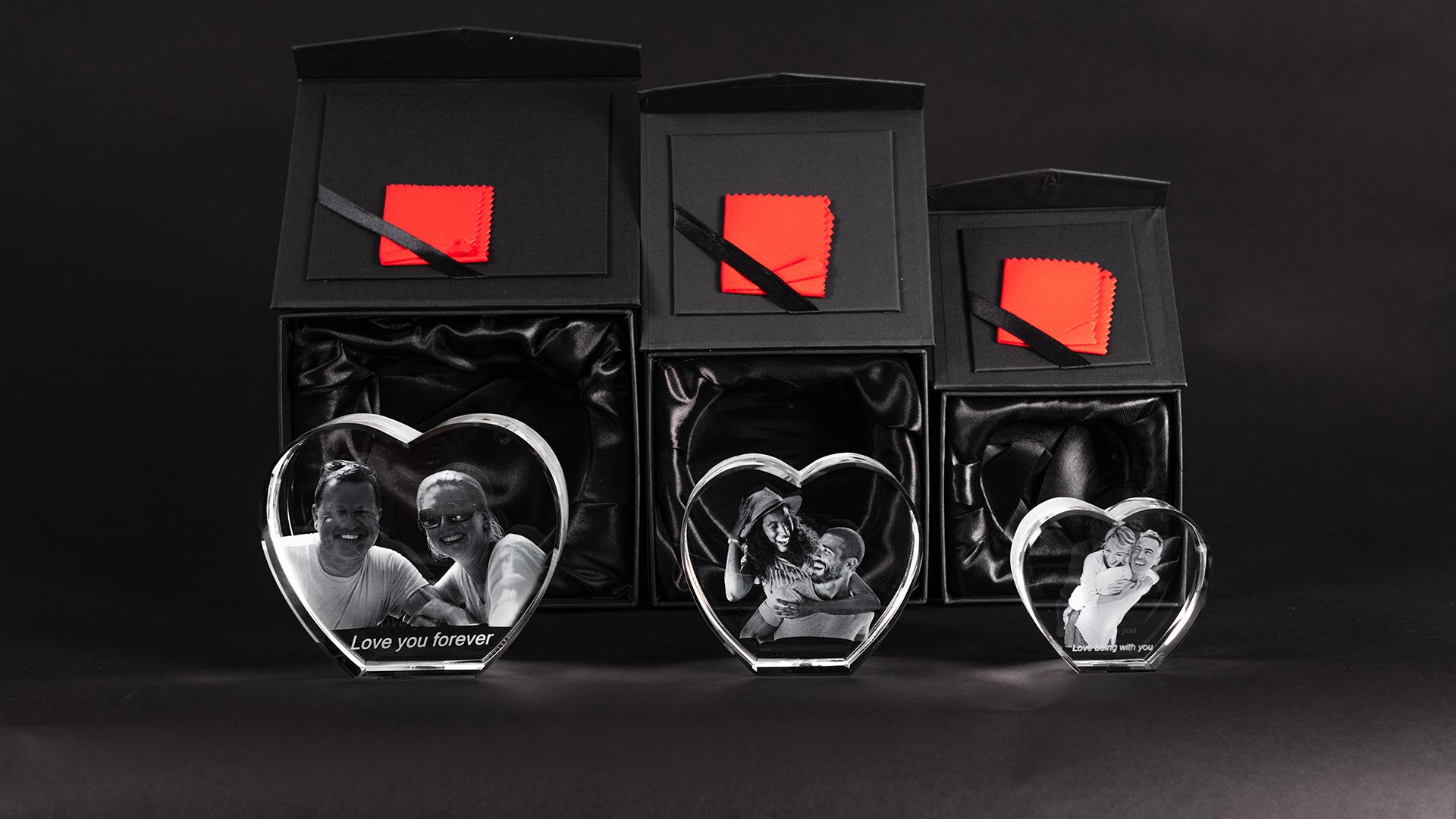
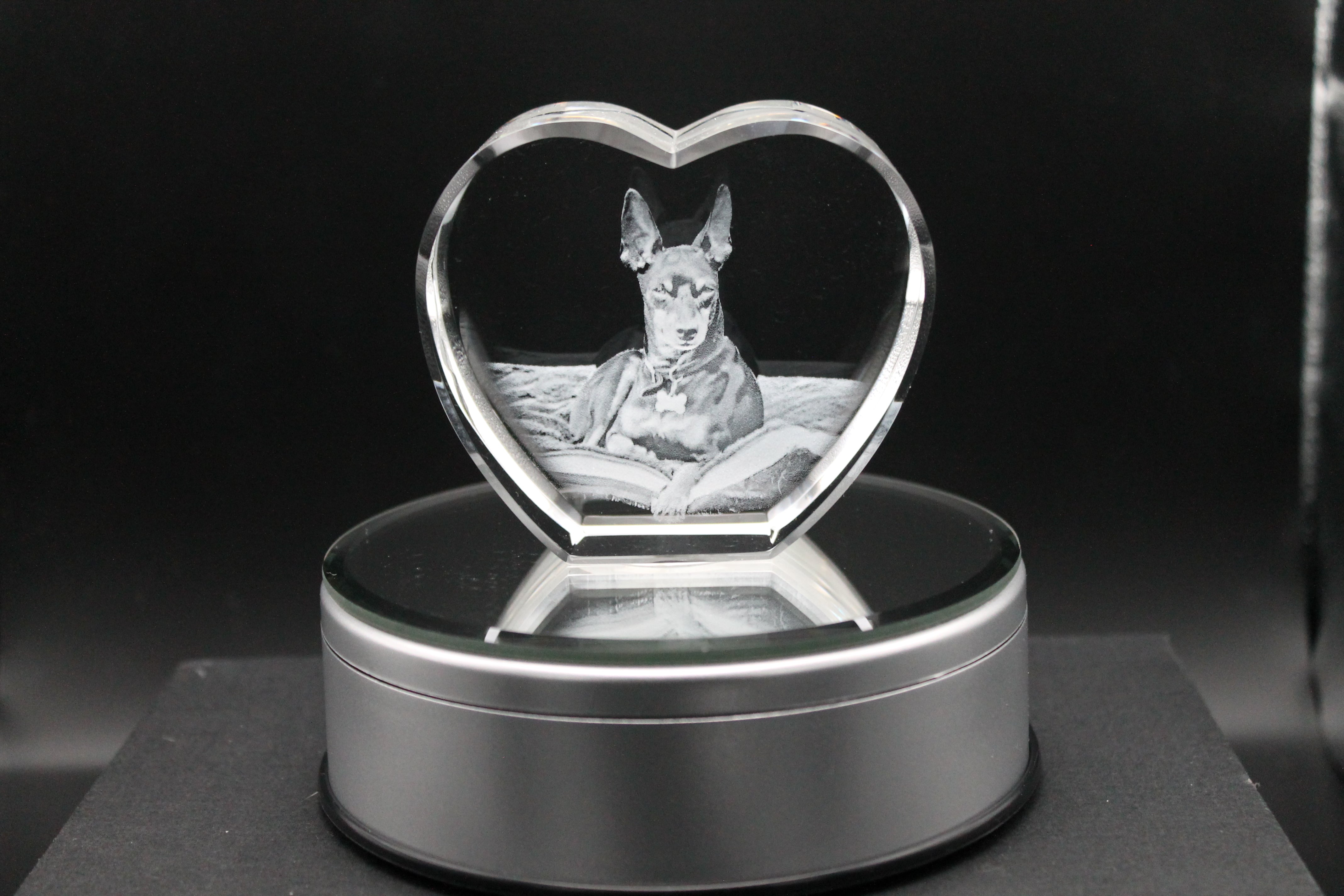
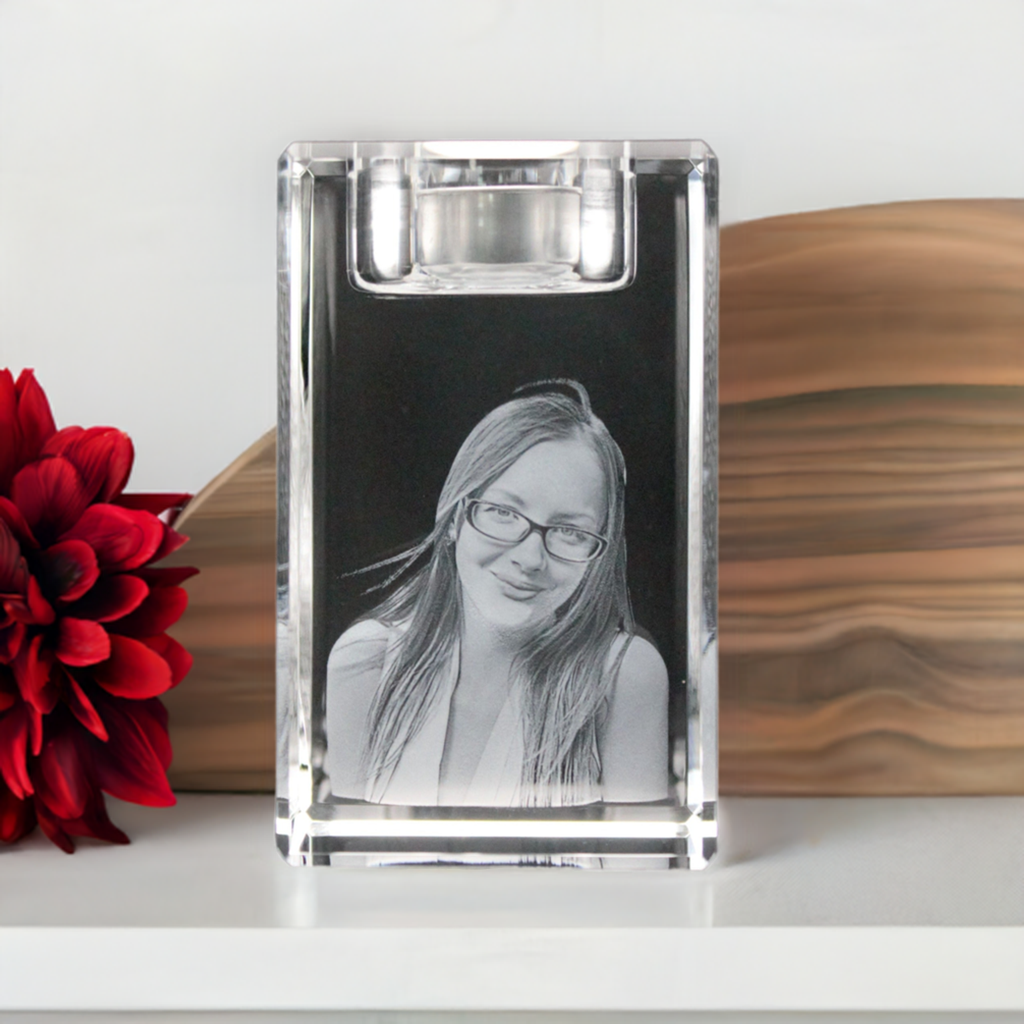
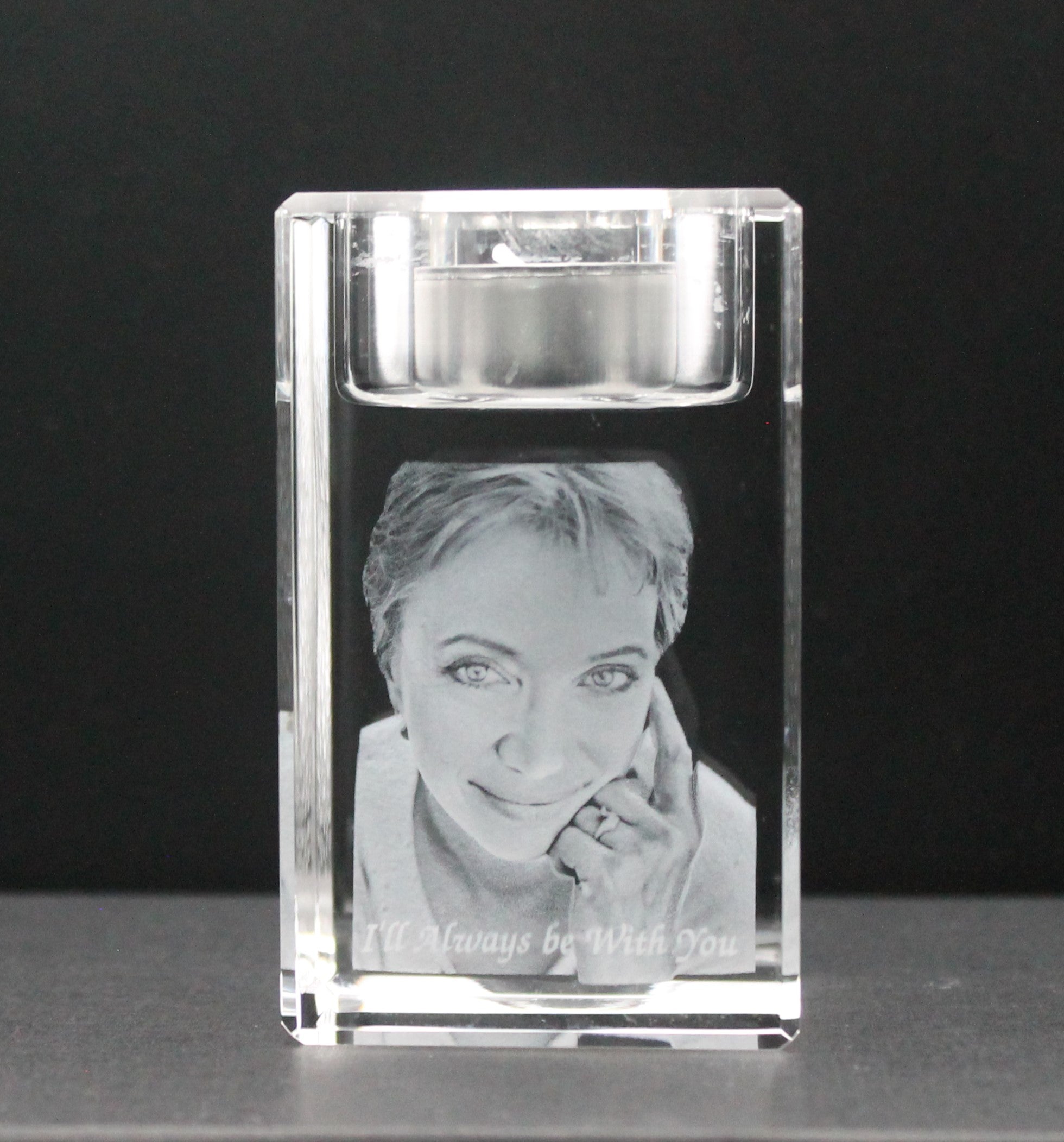
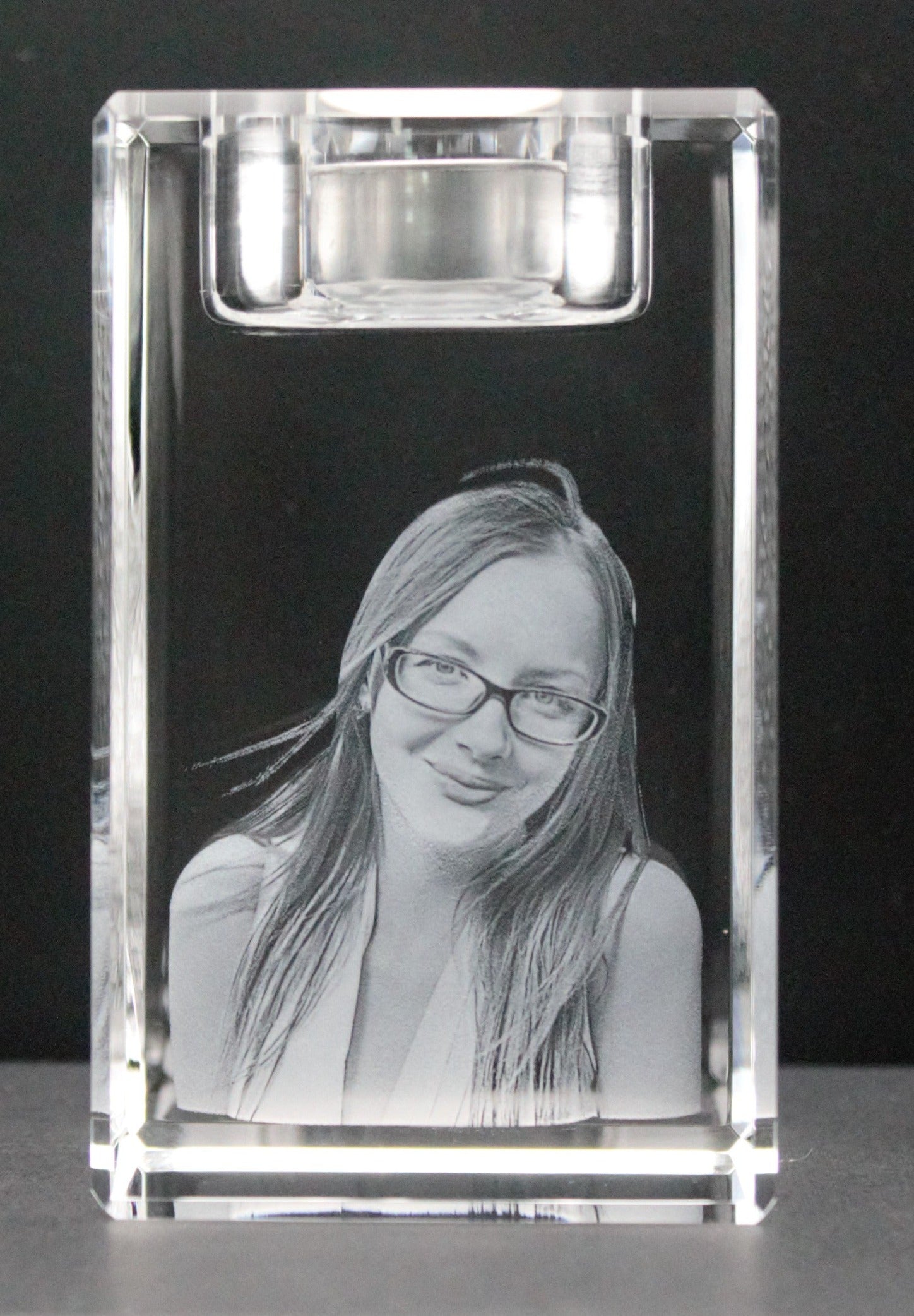
No. A 3D crystal photo cannot fade, because there is nothing in it that fades.
Fading is what happens when light breaks down a pigment or a dye. There is no pigment in a crystal photo. The image is made of millions of microscopic fractures inside the glass — tiny broken points that scatter light and therefore look white. A fracture has no colour to lose.
We have been making these for four years and over 15,000 crystals. The oldest ones we made are still in customers' houses and look exactly as they did the day they left. Here is the full picture, including the two things that genuinely can go wrong.
Why it cannot fade
Worth understanding, because it explains everything else on this page.
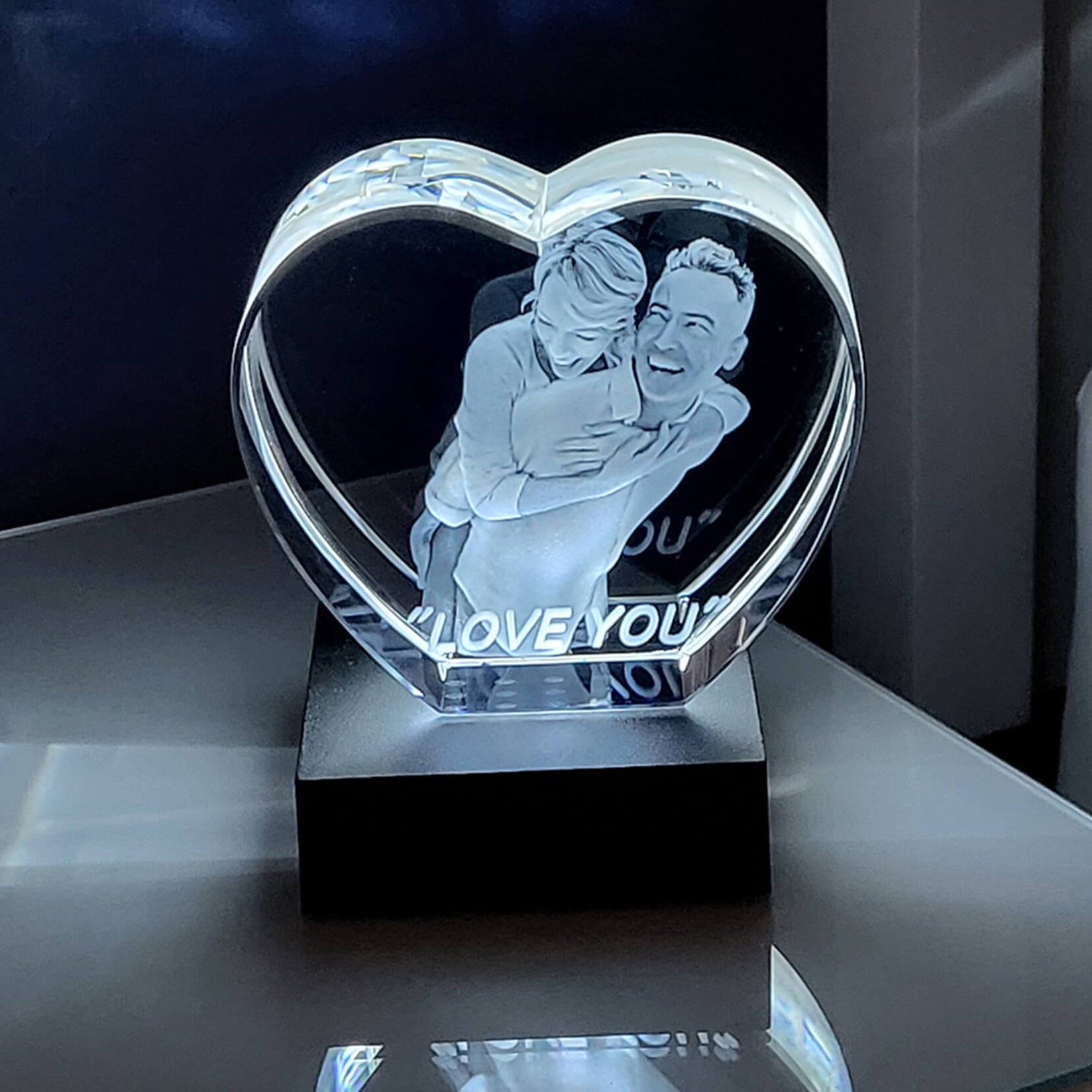
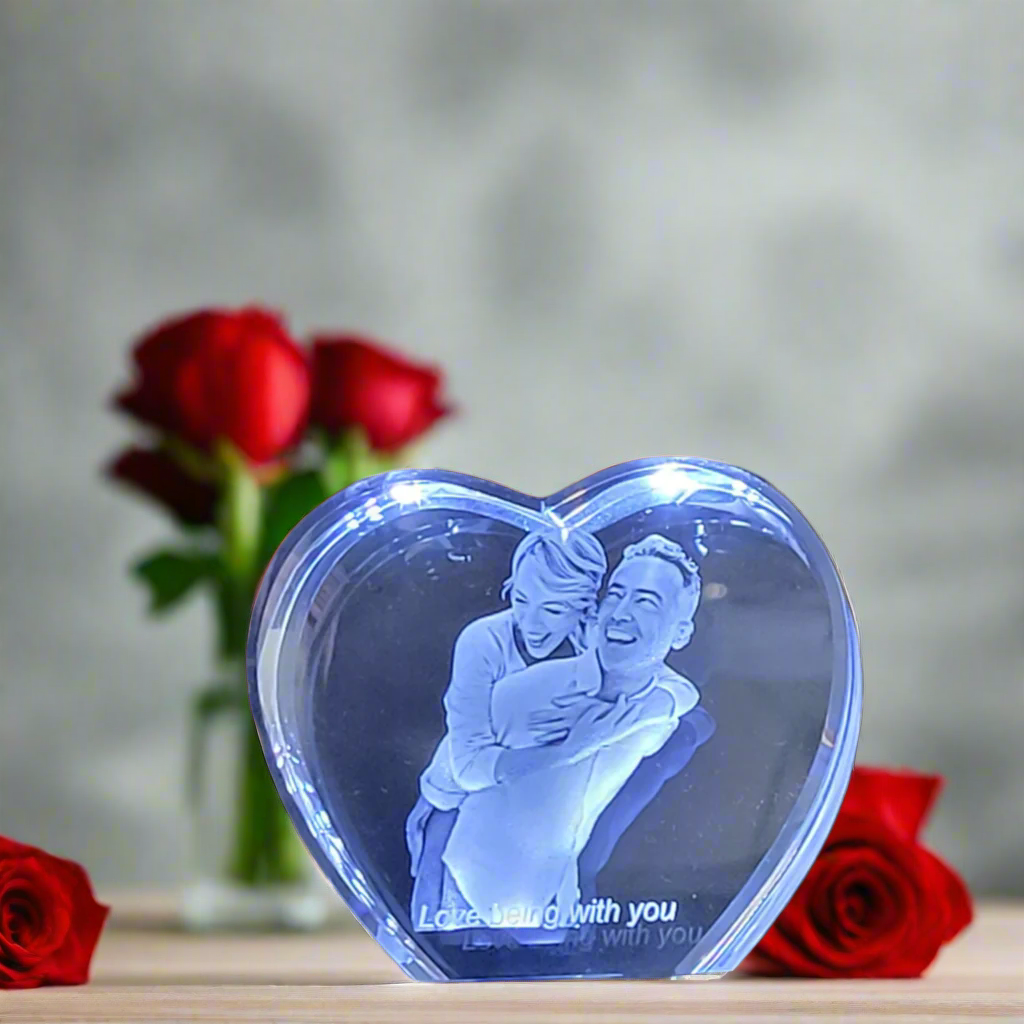
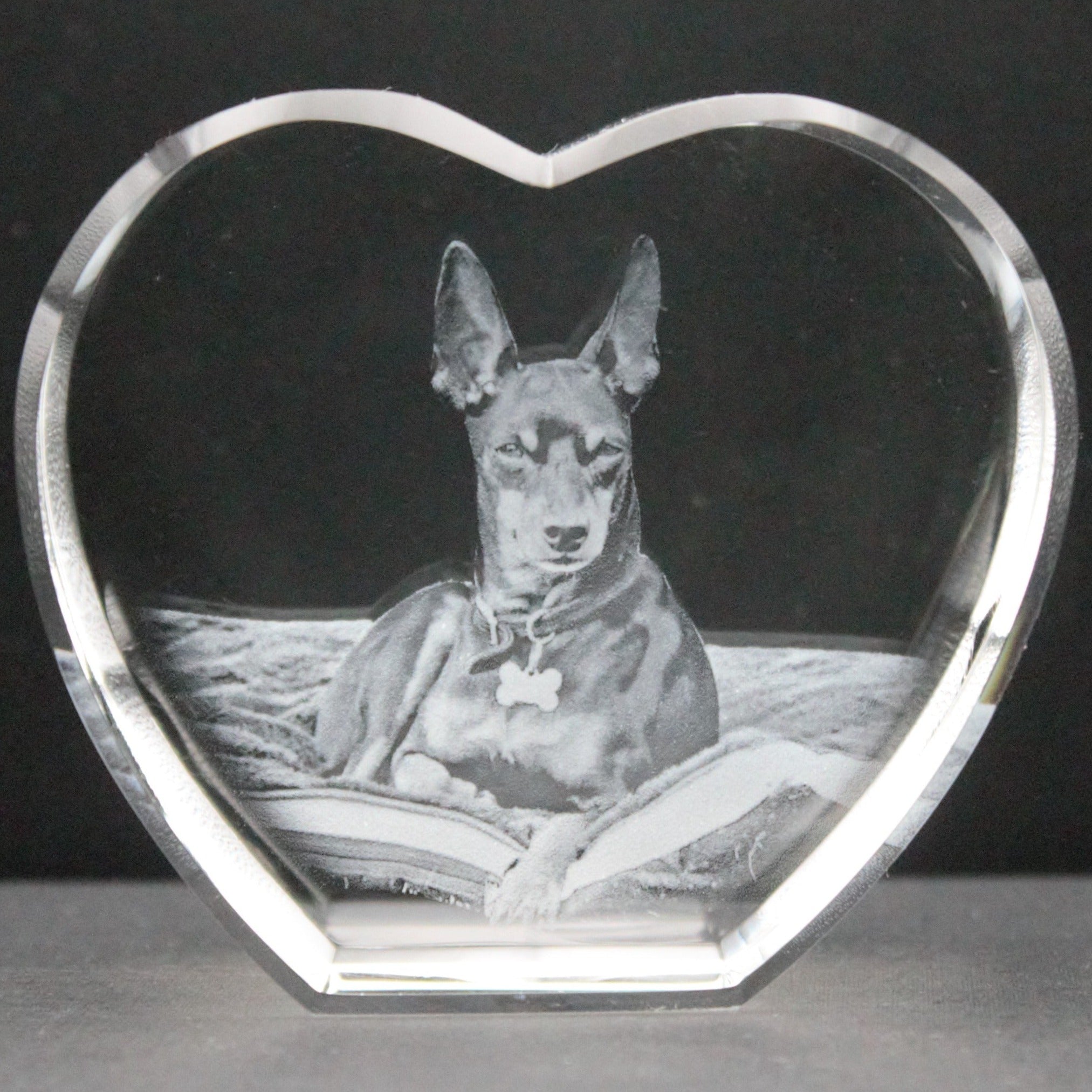
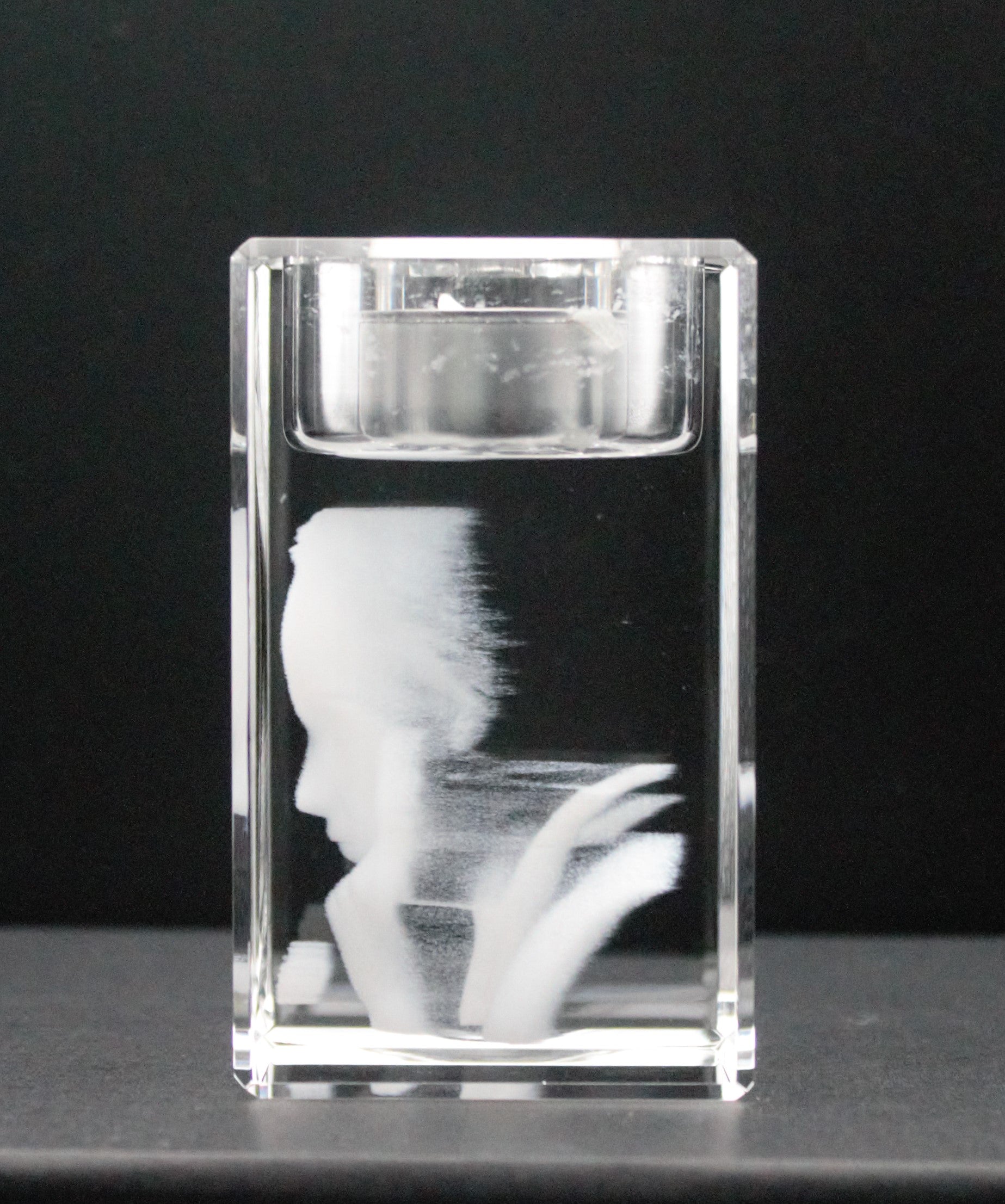
A laser is focused to a point inside a block of K9 optical crystal. At that focal point the energy fractures the glass, leaving a white dot roughly the width of a human hair. The surface is untouched — the beam passes through it without marking it. Repeat that a few million times in three dimensions and the dots form the photograph.
So the image is not on the crystal. It is the crystal, altered. There is no layer, no coating and no ink, which means there is nothing to bleach, peel, lift or oxidise. We have written the process up in more detail in how they engrave inside glass, and step by step on how 3D crystal photos are made.
Sunlight
Direct sunlight does nothing to it. This is the question we are asked most often, usually by someone about to put one on a windowsill and worrying.
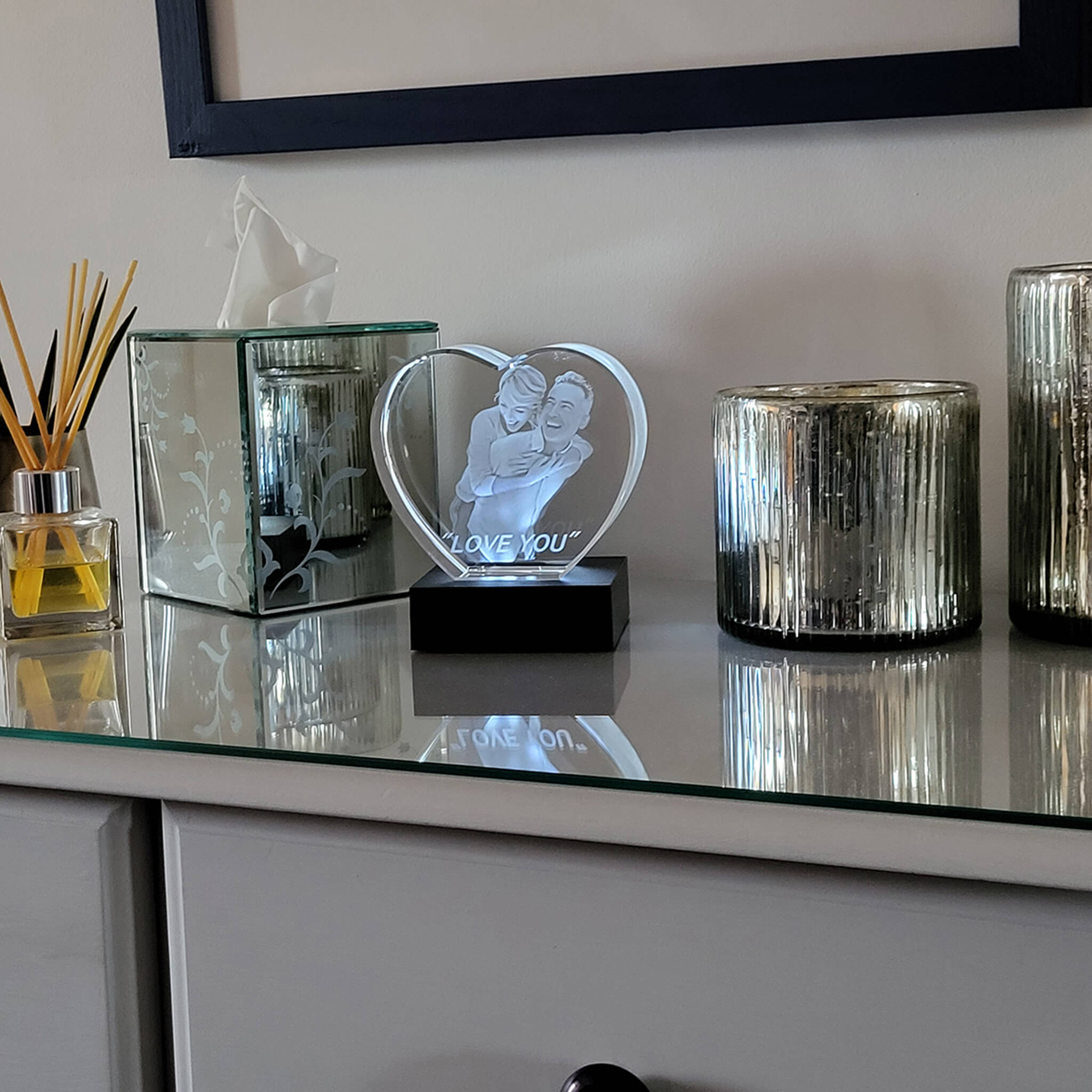
Ultraviolet light damages things with organic chemistry in them — paper, ink, dyes, many plastics. Optical crystal has none of that. A crystal in a south-facing window will be identical in twenty years.
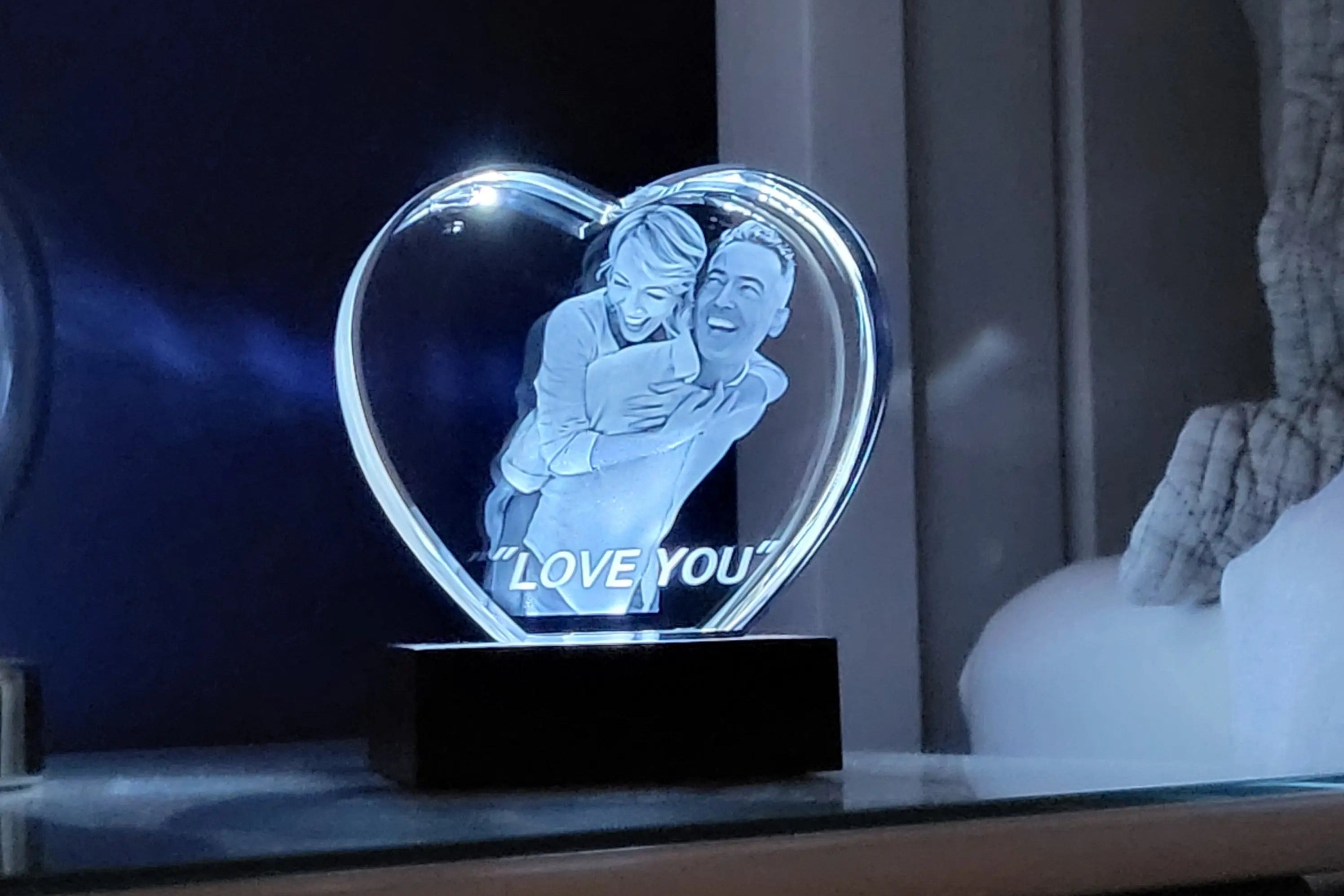
In fact it is the best place for it. The engraving is only visible because it scatters light, so the more light reaching it, the more the image stands out. A crystal in a dim corner looks flat, which is the actual reason people buy an LED base.
Yellowing and cloudiness
Some older glassware does discolour over decades, usually because of iron or manganese in cheap glass. Optical crystal is made to a specification that keeps it clear — it is the same family of glass used for camera lenses, where any tint would be a defect.
When someone tells us their crystal looks cloudy, it is on the outside every single time. Dust, fingerprints, cooking film in a kitchen, limescale where it has been near a bathroom. A damp cloth deals with all of it. The image itself is sealed inside solid glass and cannot get dirty.
Scratching
The engraving cannot be scratched. There is glass on all six sides of it.
The outside can be, like any glass — but optical crystal is hard, and it takes more than normal handling. Keyrings live in pockets with keys and coins for years and come back looking fine.
The two things that genuinely can go wrong
Being straight about this is more useful than a list of reassurances.
Dropping it. This is the real risk and there is no way round it. A solid block of crystal onto a tiled or stone floor will chip or break. It is glass. Anywhere it can be knocked by a door, a pet or a hoover is the wrong place for it.
The LED base, eventually. The crystal will outlast the base. LEDs have a long life but they are electronics, and a base that has been on for eight hours a day for a decade may need replacing. The crystal itself is unaffected — bases are sold separately for exactly this reason.
How to clean one
A soft cloth, damp with water, then buff dry. Glass cleaner is fine on the outer surface if it is properly marked. Nothing abrasive — no scouring pads, no bicarbonate paste.
That is the entire maintenance schedule, for the life of the object.
Compared with a printed photograph
This is why people buy them for memorials and for photographs that only exist once.
A printed photograph depends on dyes or pigments sitting on paper. Light, humidity and air all work on them, and colour shift on ordinary home prints is visible well within a lifetime. Anyone who has opened a 1980s album knows what that looks like — and an album print is exactly the sort of photograph we are most often asked to engrave, whether for a crystal anniversary or a remembrance piece.
A crystal engraving has no chemistry to go wrong. Whatever the photograph looked like the day it was engraved is what it will look like when it is handed on.
Questions we get asked
Can 3D crystal photos fade over time?
No. The image is not ink, dye or pigment. It is millions of microscopic fractures inside the glass itself, and a fracture cannot fade because there is no colour in it to lose. Fading happens when light breaks down a pigment, and there is no pigment involved.
Will sunlight damage a 3D crystal photo?
No. Optical crystal is not affected by ultraviolet light the way paper, ink and plastics are, and the engraving inside it has nothing to bleach. A crystal on a south-facing windowsill will look the same in twenty years. Direct sun actually shows the image at its best.
Do 3D crystal photos go yellow or cloudy?
K9 optical crystal does not yellow with age. Cloudiness on an older crystal is almost always dust, fingerprints or limescale on the outside surface, which wipes off with a damp cloth. The inside cannot be reached, so it cannot get dirty.
Can the engraving inside a crystal be scratched?
No. The engraving sits inside the block with solid glass on every side, so nothing can touch it. The outer surface can be scratched like any glass, though optical crystal is hard and it takes more than ordinary handling.
How long does a 3D crystal photo last?
Indefinitely, in normal use. There is no material in it with a shelf life. The realistic end of a crystal is being dropped on a hard floor, not deterioration.
How do you clean a 3D crystal photo?
A soft cloth, damp with water, then buff dry. Glass cleaner is fine on the outside if it is marked. Do not use anything abrasive, and there is no need to clean the image itself because it is sealed inside the glass.
Are 3D crystal photos better than printed photos for lasting?
Yes, considerably. A printed photograph relies on dyes or pigments that break down under light and humidity, and most home prints show visible shift within a few decades. A crystal engraving has nothing to break down.
If the photo matters
This is the whole reason people choose crystal for a memorial or for the only copy of an old picture. There is a plain guide at choosing a memorial crystal, and the full range is in all 3D photo crystals.
Send us the photograph and we will tell you honestly what we can do with it — get in touch.
Sarah & Shaun
Related reading
How do they engrave inside glass? · How much do 3D crystal photos cost in the UK? · Which shape should I choose? · Choosing the right photo · Which company makes the best in the UK? · Pet memorial crystals